Save money on groceries
Watch here on KATU Afternoon Live!
![[HERO] 5 Realistic Ways to Slash Your Grocery Bill (Without Cutting Out the Good Stuff)](https://cdn.marblism.com/EHzPZjquRtg.webp)
Let me guess: you looked at your bank statement this week and thought, "Wait... we spent THAT much on groceries?!"
I get it. Groceries have become the silent budget killer for so many families, especially self-employed ones juggling fluctuating income. You're not out here buying champagne and caviar. You're just trying to feed your family without living off ramen and stress.
Here's what I know after working with dozens of families: you don't need to become an extreme couponer or give up the foods you actually like. You just need a few simple systems that create boundaries without making you feel deprived.
So let's talk about five realistic strategies that can genuinely cut your grocery spending, without turning mealtime into a sad, bland experience.
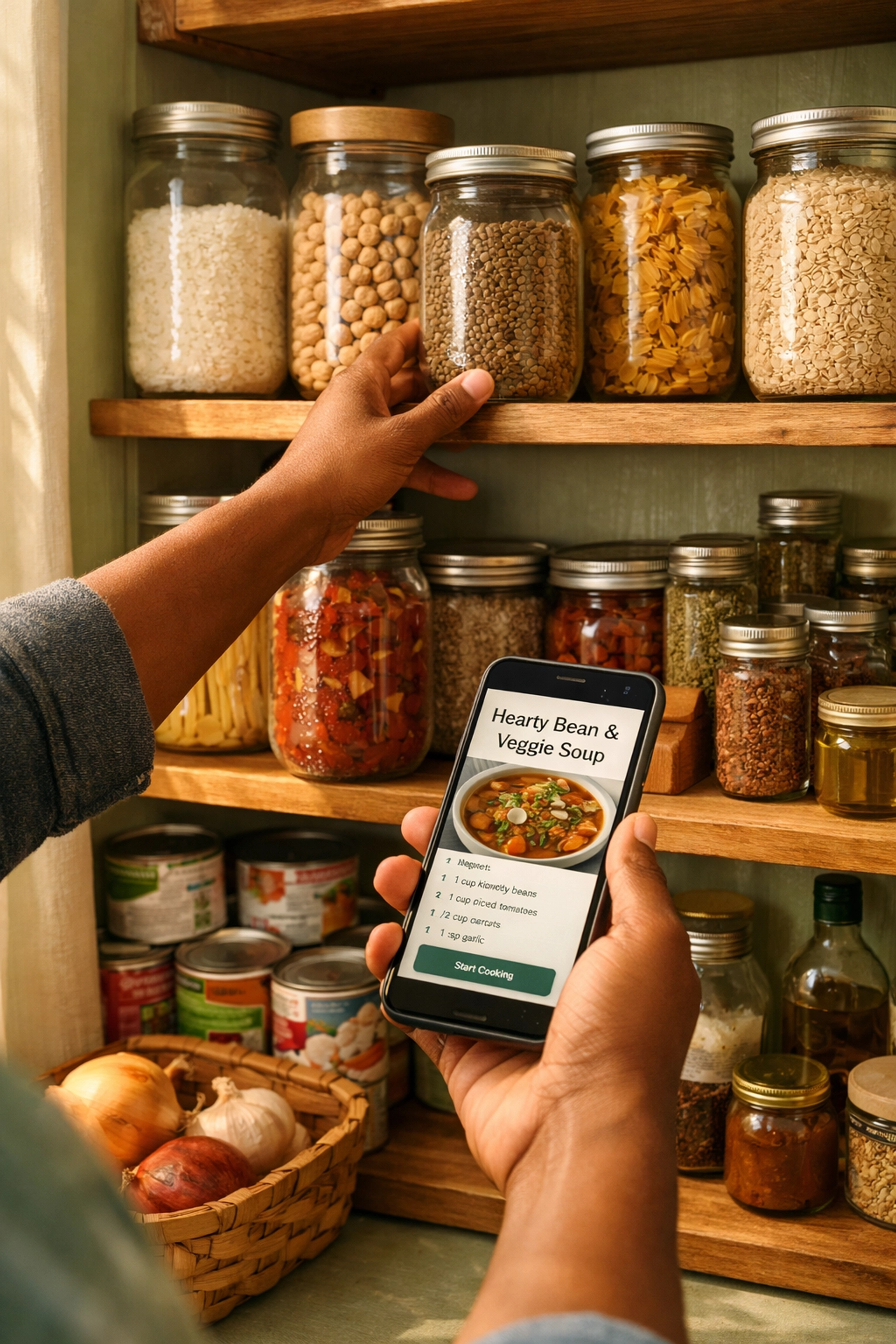
1. Do a Pantry Challenge (AKA: Shop Your Own House First)
When's the last time you actually used that random can of coconut milk in the back of your pantry (ok even *I* feel called out with this one)? Or the frozen chicken breasts buried under last year's ice packs?
Here's the deal: most of us have $100-$200 worth of food sitting at home that we keep forgetting about. Meanwhile, we're at the store buying more stuff.
The Pantry Challenge is simple: Pick a week (or even just 3-4 days) where your only goal is to use up what you already have. You're allowed to buy fresh produce, milk, and ingredients you need to complete a meal, but that's it. Everything else? You're shopping your own pantry, fridge, and freezer first.
Why this works:
- You'll save money immediately (small grocery trip = less spending)
- You'll reduce food waste, which feels surprisingly good
- You'll get weirdly creative in the kitchen (breakfast burritos with random leftover veggies? Yes please.)
Tools that help: If you're stuck staring at your pantry thinking "I have no idea what to make," try apps like SuperCook or Cooklist. You plug in the ingredients you have, and they spit out actual recipes. Game changer.
Try this once a month, and you'll be shocked how much you free up in your budget. That extra $150+? It could go toward your tax savings account, an emergency fund, or finally paying off that credit card.
2. Cash Out Your Grocery Budget (Yes, Actually Use Bills)
I know, I know. Who carries cash anymore?
But hear me out, this one strategy has saved families hundreds of dollars a month, and it's stupidly simple.
Here's how it works: Decide on your weekly grocery budget. Let's say it's $150. You go to the ATM, pull out $150 in cash, and that's what you bring to the store. No debit card. No credit card. Just cash.
Why does this work when "trying to stick to a budget" doesn't?
Because swiping a card doesn't feel like anything. It's abstract. But when you're standing in the checkout line watching the total climb, and you physically see your cash stack shrinking? That's a boundary your brain actually respects.
Important note for couples: Both partners need to be on board with this, or it creates resentment fast. If one person is "the cash person" and the other is still swiping freely, you're going to have a problem. Have a quick money date, agree on the number, and commit together.
As a YNAB Certified Coach, I'll tell you this is one of the fastest ways to make your budget feel real instead of theoretical. Cash creates a physical limit that your brain can't negotiate with.
3. Buy in Bulk (But Only for Specific Things)
Bulk buying gets a bad rap because people do it wrong. They walk into Costco, get seduced by the $8 rotisserie chicken and a 50-pack of granola bars, and walk out $300 poorer with half the stuff expiring before they use it.
So let's be strategic.
Buy in bulk ONLY for:
- Meats you can freeze (chicken breasts, ground beef, pork chops)
- Pantry staples you use regularly (rice, pasta, oats, canned goods)
- Household items that don't expire (toilet paper, laundry detergent)
Do NOT bulk buy:
- Fresh produce you won't eat fast enough
- Snack foods your family will demolish in 48 hours
- "Deals" on things you don't actually need
Here's the secret: it's okay to shop at 2-3 different stores to get what you need. I know the time cost feels real when you're self-employed and every hour matters. But if you can snag meat on sale at one store, produce at another, and bulk staples at Costco once a month? You're playing the game right.
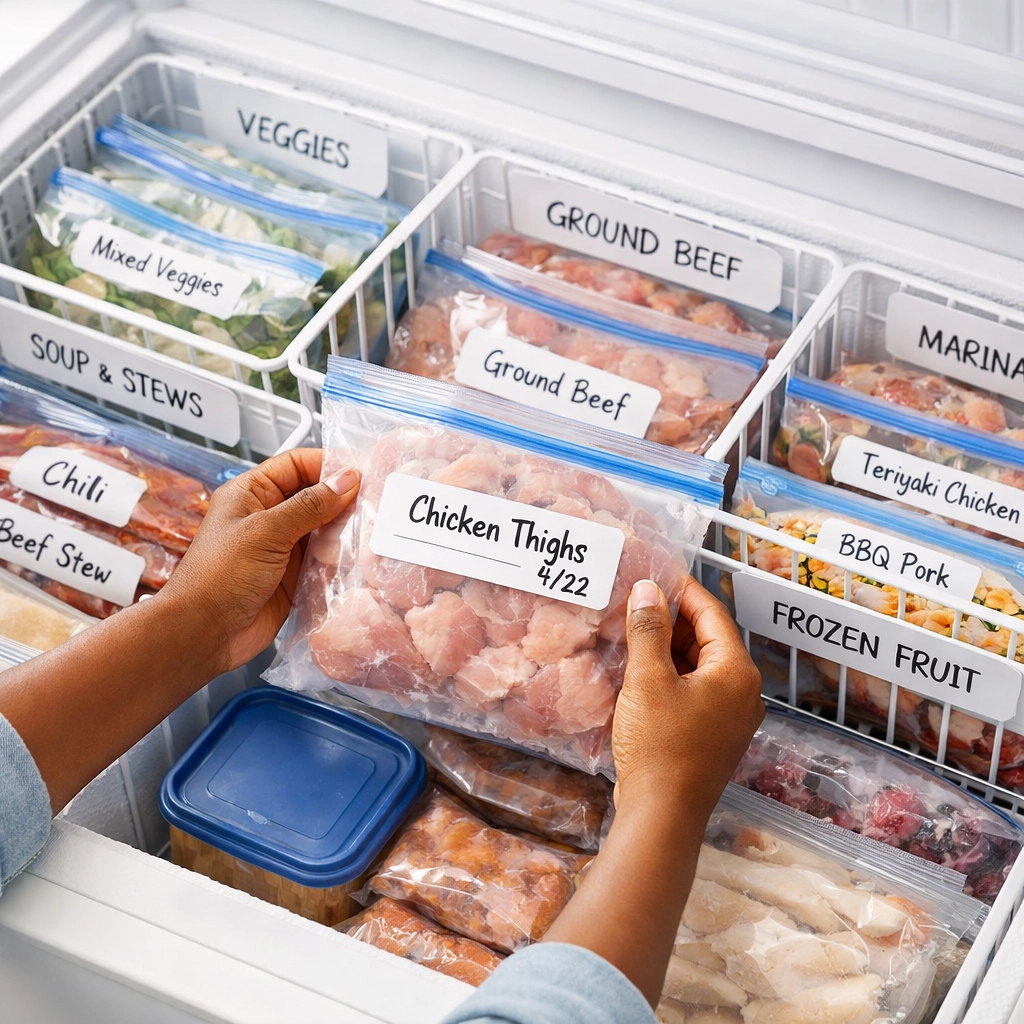
Pro tip: If you have a garage freezer, you're in the bulk-buying big leagues. Stock up when meat goes on sale, portion it out into meal-sized baggies, and you've just created your own "convenience food" at a fraction of the cost.

4. Switch from Delivery to Curbside Pickup
Look, I'm not here to shame anyone for using grocery delivery. If you're a busy parent running a business, I get it. Time = money, and sometimes paying for delivery is worth it.
But let's talk numbers.
Between the delivery fee ($5-10), the service fee (another $5-8), item markups (groceries cost more on the app than in-store), and the tip (another $10-15+)... you're easily spending an extra $20-30 per order. If you're ordering twice a week? That's $160-240 a month just in fees.
The compromise? Curbside pickup.
You still get to shop online (which saves time and reduces impulse buys). You still don't have to drag kids through the store (this one is huge for me). But the pickup is usually free, and the prices are the same as in-store.
Or here's another hack: use the grocery delivery apps to build your list while sitting on your couch, then screenshot it and use it while shopping in person. You get the convenience of browsing online without the fee markup.
This one shift alone can free up $100+ a month. That's real money that can go toward your business, your goals, or just feeling less stressed.
5. Choose Frozen Over Fresh (Sometimes)
Raise your hand if you've ever bought fresh berries with good intentions... only to find them moldy in the back of the fridge three days later. 🙋♀️
Here's a truth we don't talk about enough: frozen produce is not "less than" fresh. In fact, it's often frozen at peak ripeness, which means it retains more nutrients than "fresh" produce that's been sitting in transit and on shelves for days.
When to choose frozen:
- Fruits in the winter (berries, mango, pineapple)
- Vegetables you're using for cooking (not salads)
- When you're stocking up and don't want waste
- When fresh prices are ridiculous
When to stick with fresh:
- Salads and raw snacking
- When the item is in season locally
- When you know you'll use it within a few days
The money mindset coaching piece here is this: frozen isn't failing. It's being strategic. It's refusing to waste money on food that rots. It's choosing the version that actually serves your family instead of the "ideal" version that ends up in the trash.
You Don't Have to Do All Five at Once
Here's what I want you to hear: you don't need to implement all five of these strategies tomorrow. In fact, please don't. That's a recipe for burnout and giving up entirely.
Pick one. Maybe it's the pantry challenge this week. Maybe it's pulling cash for your next grocery run. Maybe it's just switching one delivery order to curbside pickup.
Start there. Build the habit. Then add another.
This is what I do as a Financial Coach for self-employed families: I help people find the systems that actually work for their real life, not some Instagram-perfect version of budgeting. If you're in Oregon or California and feeling overwhelmed by your finances (high prices of groceries included), let's talk. I help people from all over of course, OR & CA are just my home towns :)
Your grocery bill doesn't have to be a monthly surprise that makes you want to cry into your overpriced almond milk. With a few small shifts, you can take back control without sacrificing the foods that make life feel good.
Now go check your pantry. I bet you've got dinner in there already. 😉